What is Qi Men Dun Jia? The 1,800-year-old Chinese tool that won wars
There is a Chinese strategy system most people in the West have never heard of. It was used by generals to win battles. It was used by emperors to choose the day of important meetings. Today, it is still used quietly by some of the wealthiest business families in Asia. Its name is Qi Men Dun Jia. Here is what it is, who used it, and how it can help you.
The story most people don't know
Almost two thousand years ago, China was broken into three kingdoms. Three armies fought for the throne. The smallest of them, called Shu, had no chance on paper. Their soldiers were fewer. Their land was poorer. Their walls were weaker.
But Shu had one man.
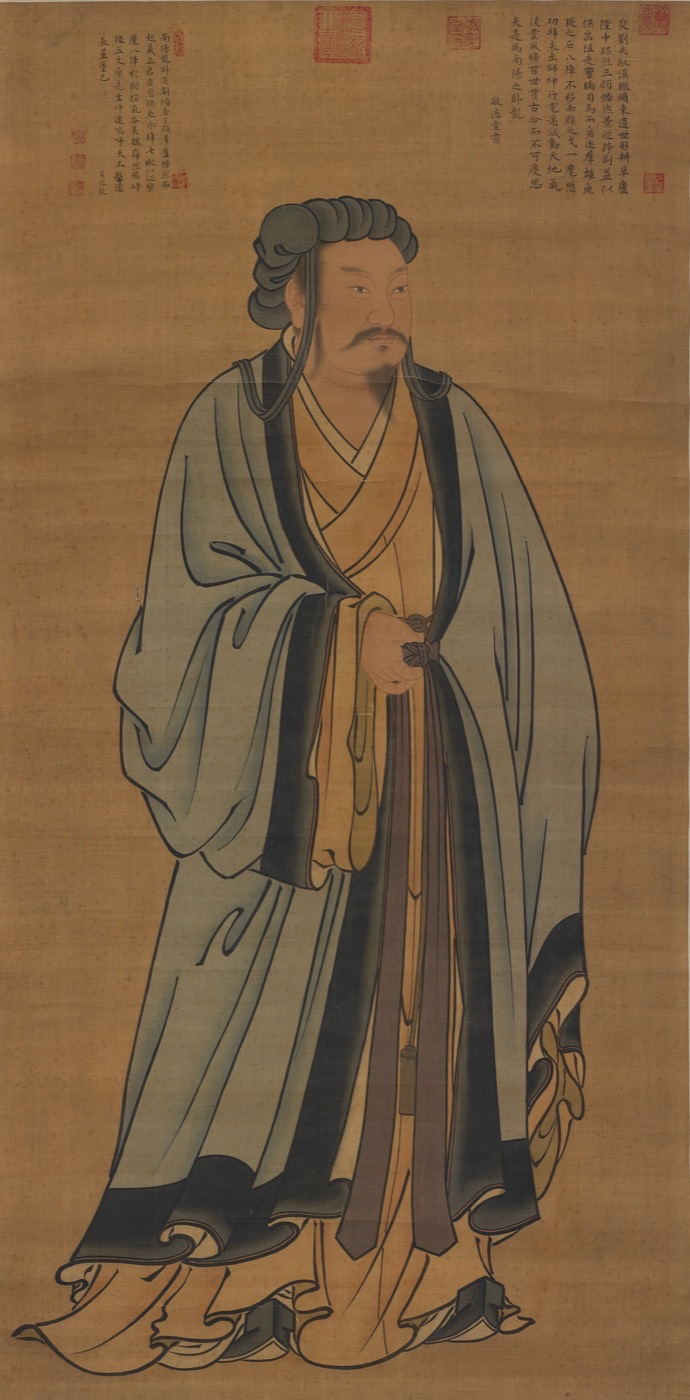
His name was Zhuge Liang (say it: joo-guh leeang). He was the chief strategist for the king of Shu. Today, in China, every child learns his name. He is the most famous strategist in Chinese history — the way Napoleon is famous in the West.
Zhuge Liang did not win his battles by having more men. He won by knowing when to attack, where to attack from, and who to send. He could read a moment in time the way a doctor reads a pulse.
The tool he used to do this had a name: Qi Men Dun Jia. In English: "the mysterious gates and hidden stems".
That is the system we are talking about today. Same name. Same rules. Eighteen hundred years later.
What does it actually do?
Qi Men Dun Jia is not a horoscope. It does not tell you who you are. It does not tell you your future.
It tells you something far more useful. It tells you, for any moment in time you choose, two things:
- Is this a good moment to act?
- If yes — in which direction should the action go?
That is it. Two answers. But those two answers, applied for two thousand years, have decided wars, marriages, business deals, and the timing of trips.
Imagine you have an important meeting tomorrow. A job interview. A first date. A pitch to an investor. A talk with someone you love about something hard.
You can show up at any time. You can drive there from any direction. You can sit on any side of the table. Most people give zero thought to any of this. They show up when the calendar says.
Qi Men Dun Jia tells you: this hour is open. That hour is closed. Going from the south will help you. Going from the west will hurt you. The energy in the room at 2pm is sharp. At 4pm it is soft.
You can ignore that information. You can use it. The choice is yours.
How is it different from astrology?
Western astrology asks: who are you?
It is a personality system. It tells you about your character based on the day you were born.
Qi Men Dun Jia asks a different question: what is the moment?
It is a timing system. It tells you about the moment you are about to step into. The same person, asking the same question, gets a different answer depending on when they ask.
This is why generals used it and astrology was used by poets. One is for action. The other is for understanding.
Who uses it today?
Most users of Qi Men Dun Jia today are private. They do not advertise it. There is a reason for this.
If you are a CEO making a hundred-million-dollar acquisition, you do not tell the press you consulted a Chinese metaphysics chart before signing. The press would have a field day. So you keep it quiet. You consult. You decide. You sign.
What we know is this: Qi Men Dun Jia consultants exist openly in Hong Kong, Singapore, Taiwan, mainland China and Malaysia. They serve property developers, listed-company chairmen, fund managers and old-money families. They are paid well. The most respected among them have waiting lists.
The system has also crossed into the English-speaking world over the last twenty years. Books by serious teachers — Joey Yap, Master Sherwin Tjia, Hung Hin-Cheong — are now available in English on Amazon. Online courses sell to thousands of students per year.
What was secret for a thousand years is, slowly, becoming open.
How does it work, really?
Without the technical detail, here is the shape of it.
For any moment in time, the system draws a square chart with nine boxes. Each box is a direction (north, south-east, west, etc., plus the centre). Inside each box, the system places a star, a gate and a deity. There are nine of each. The combinations change every two hours.
A trained reader looks at the chart and sees, in seconds:
- Which boxes are favourable for the kind of action you want.
- Which are blocked.
- Which directions to go in.
- What kind of energy will help you (sharp, soft, slow, fast, hidden).
That is one chart. To pick a good time to act, the reader scans many charts ahead in time and finds the windows that are open for what you want.
It looks complicated because it is complicated. That is why it stayed in the hands of trained masters for centuries. A single chart can take a beginner an hour to read by hand.
Why this matters now
Most decisions in modern life are made on a coin flip. People schedule a hard conversation for "after work" because that is when they are free. They start a new business "in the new year" because the calendar resets. They buy a house "when they find the right one".
Almost nobody asks: is this moment built for what I am about to do?
Once you start asking that question, you cannot un-ask it. You start to notice that some weeks everything you push on opens, and other weeks every door is jammed. Most people call this luck. The Chinese call it timing — and they have spent two thousand years writing down how to read it.
You can read your own chart
The Sanctuary app has a Qi Men Dun Jia tool inside it. You enter the moment you want to read. The app draws the chart. Then, in plain English, it tells you what the moment is good for and what it is not.
Use it before you sign a contract. Before a hard talk with someone you love. Before a launch. Before a long trip. Before a job interview.
You will not understand every layer of the chart at first. Nobody does. But you will see the headline — green light, yellow light, red light — and the direction the energy wants to go.
This is the tool Zhuge Liang carried in his head when he had no army worth speaking of and somehow held back two larger ones for years.
You can carry the same tool, in your phone, today.
Try a Qi Men Dun Jia reading
Pick a moment that matters. The app draws the chart and tells you, in plain English, what it is good for.
Open SanctuarySources
- Classical Chinese histories on Zhuge Liang's role as chief strategist of the kingdom of Shu during the Three Kingdoms period (3rd century AD), including the Records of the Three Kingdoms (Sanguozhi) by Chen Shou.
- English-language books on Qi Men Dun Jia by Joey Yap (JY Books), Master Sherwin Tjia, and Hung Hin-Cheong, available on Amazon and the publishers' sites.
- Academic literature on Chinese divination and military strategy, including university-press translations of classical military texts and the cultural history of Chinese metaphysics.
- Reporting and interviews on the Hong Kong, Singapore, Taiwan and mainland Chinese consultancy market for Chinese metaphysics services to high-net-worth families and listed companies.
A full source library with quotes and links is maintained internally. Press inquiries: info@vallorani.uk.